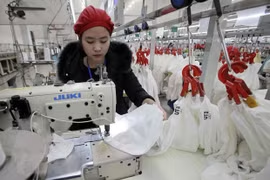
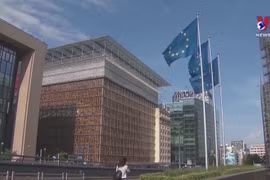
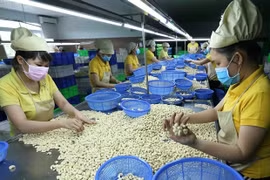
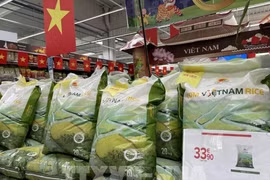
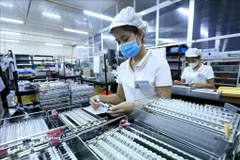
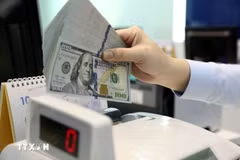
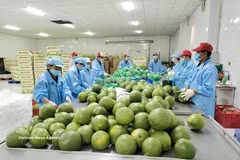
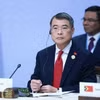
The EU-Vietnam Free Trade Agreement (EVFTA) has generated positive results, according to Dr. Daniel Müller. (Photo: VNA)
 He cited data from the German Federal Statistics Office inAugust as showing that the trade hit 64.3 billion EUR (70.26billion USD) and that between Vietnam and Germany was 18.1 billion EUR in 2022.In the year, Vietnam enjoyed a 38.9 billion EUR trade surplus with the EU and11.3 billion EUR with Germany.
The direct and positive effects of the EVFTA on thisincrease in trade volumes are reasonable, he said, adding that trade in servicesalso increased, bringing a surplus to the EU.
For German businesses, the deal is considered an important"addition" in establishing new economic relations or expandingexisting commitments with Vietnam. As the EVFTA will gradually eliminatetariffs over the next few years, further positive effects can be expected, hesaid.
Dr. Müller said that thanks to the EVFTA, access to particulartrade areas in Vietnam has become binding and more reliable. The competitiveadvantages that Vietnam has enjoyed when joining the EVFTA have also made otherASEAN countries such as Thailand and Indonesia more interested in a similardeal with the EU, he added.
Overall, the deal has generated good outcomes for both sides,he said, noting Vietnam’s export has risen considerably and EU and Germany havebenefited from importing goods from Vietnam.
 Dr. Daniel Müller, Regional Manager for ASEAN at the German Asia-Pacific Business Association. (Photo: VNA)
 He advised Vietnamese firms to enhance their exportcapacity. The Vietnamese Government should continue to implement commitments, especially in improving the legal framework for foreign businesses,including the protection of intellectual property rights.
Meanwhile, it remains to be seen how the Supply Chain Act,which has now taken effect from Germany and a similar law coming from the EU,will have an impact on the supply chain from Vietnam, he said.
Dr. Müller highlighted the advantages in bilateralcooperation as the economies and businesses of the two sides can greatly supplementeach other. German companies, with their technology and experience, can contributeto the automation and digitisation of the production processes in Vietnamesecompanies as well as the improvement of productivity in Vietnam.
He held that the two sides can work together to build anddevelop a network of suppliers for the demanding industrial production of Germancompanies in Vietnam. The two sides can also collaborate in the workforcedevelopment. German companies should systematically support their partners inVietnam to help them meet the strict standards of exporting into the EU andalso to increase the resilience of the supply chain.
However, the expert advised businesses to carefully explore each other’s characteristicsas well as the business culture to avoid uncertainties and evendisappointments. Regular exchanges and contacts between businesses of the twocountries can be a solution to this problem, he suggested./.
VNA